
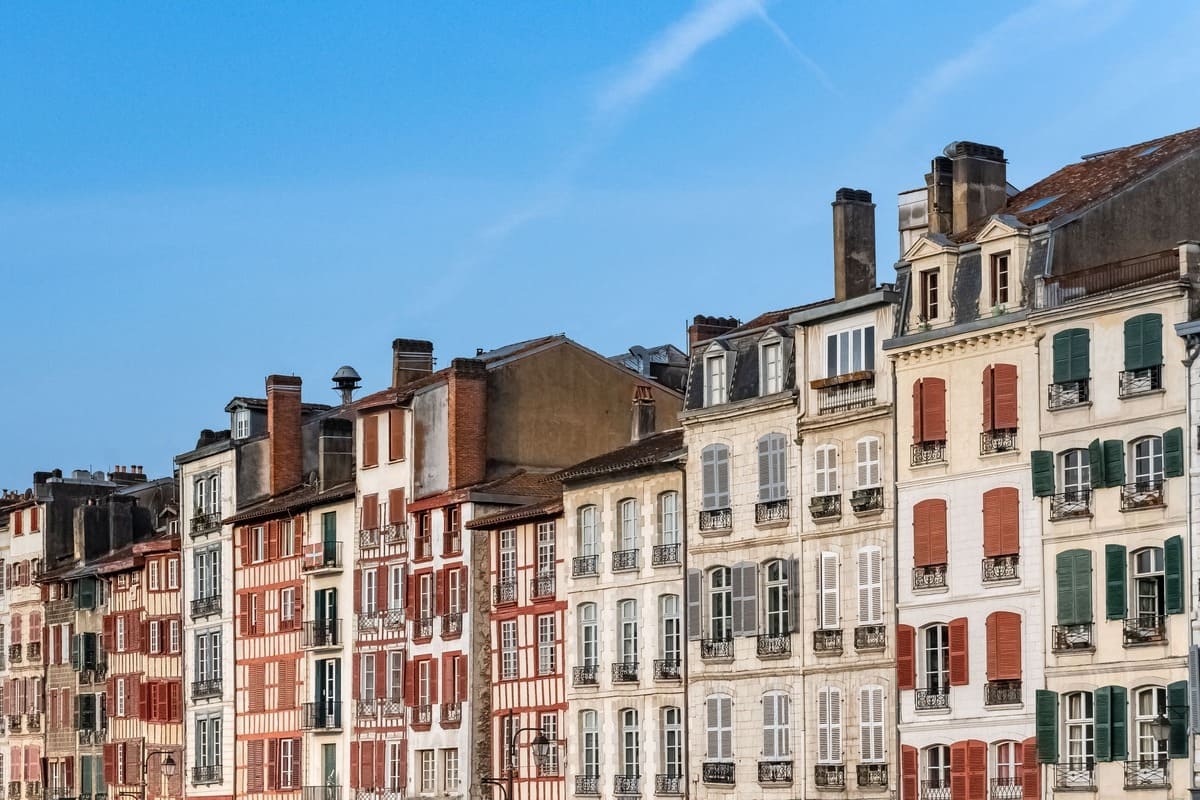
France may be the most visited country in the world, playing host to over 100 million guests annually, and listen, we get it:
From the elegant Haussmann-designed boulevards of Paris, down to Nice’s scenic Promenade des Anglais, stretching along a turquoise Mediterranean, there’s plenty of Old World charm to be admired in the Land of Enlightenment.
Be that as it may, you’d be shocked to find out how many of those tourists actually visit France, and not just flock to the Champs de Mars for an Eiffel Tower selfie. Spoiler alert, it’s not that many, with about half visiting Paris only.
Just between us, they have no idea what they’re missing out on: now, if you’re keen on exploring France beyond the City of Lights, where prices are on the cheaper end, and crowds aren’t packed in shoulder-to-shoulder, here are 5 gorgeous hidden spots for your consideration:
Bayonne
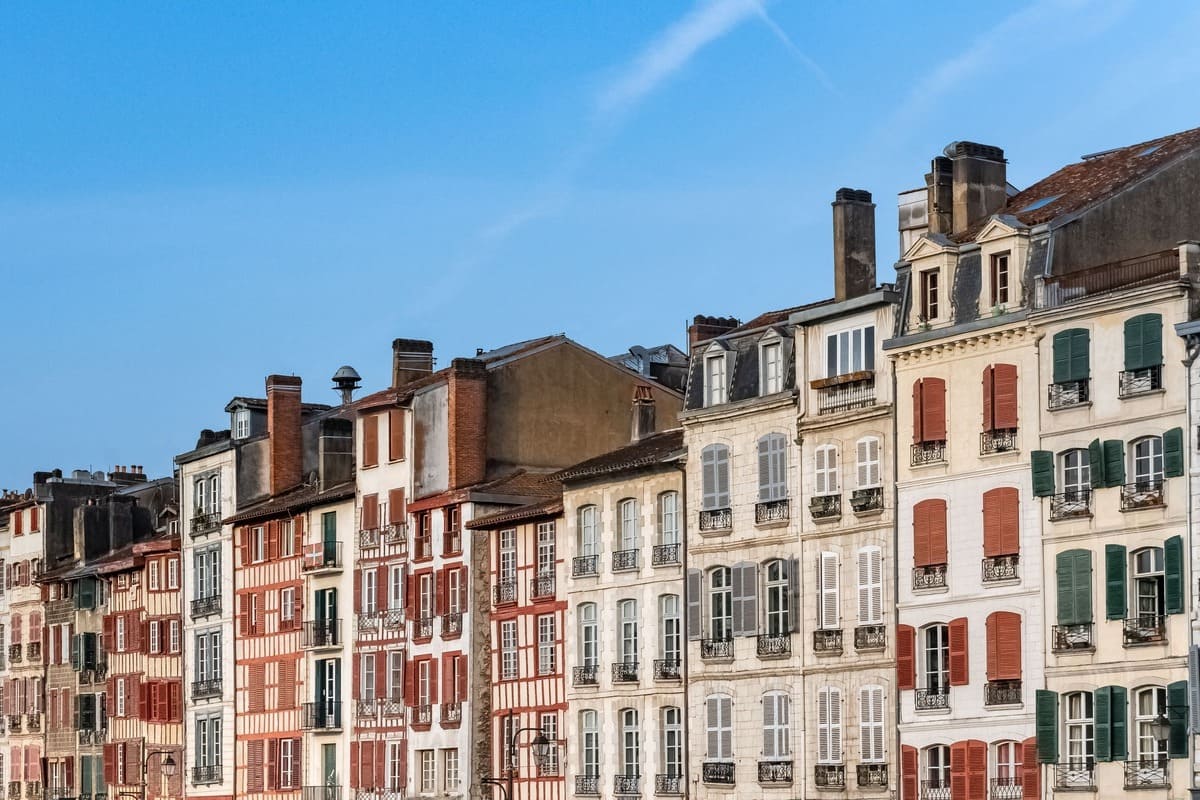
A major cultural hub in the Basque Country, in southwest France, Bayonne sits at the confluence of the fast-flowing Nive and Adour Rivers, and it’s a historically rich city most first-time visitors to the country will skip. Tant pis, as the French would say: we get to keep it all to ourselves.
In the center of Bayonne, known locally as Grand Bayonne, there stands a landmark Gothic cathedral, best known for its well-preserved 13th-century cloister, Château‑Vieux, a medieval castle built over the remains of a Roman castrum, and the defensive walls that encircle the Old Town.
Over in Petit Bayonne, the smaller, more ‘modern’ side of town (still pretty old by American standards), you’ll find a charming riverfront lined with cream-colored buildings, distinguished by their brightly-painted shutters, street markets, and family-owned eateries.
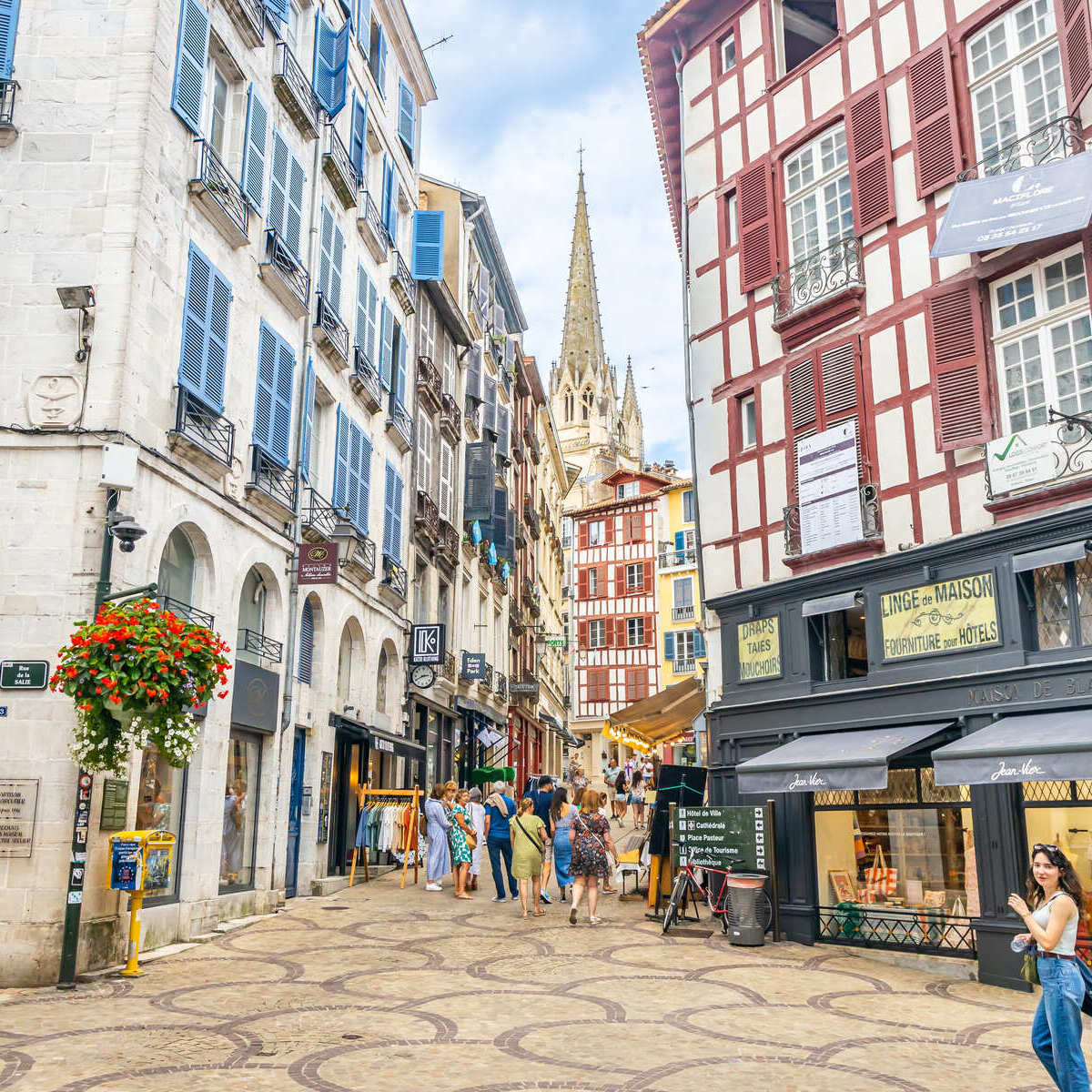
Picturesque as these might be, our personal favorite attraction to check out in Bayonne has to be the covered market, Les Halles de Bayonne. It’s your go-to spot for buying local produce, particularly regional Basque food, and sampling fresh-out-the-oven pastries.
Average Prices In Bayonne, France
| Item | Average price (USD) |
| Meal in inexpensive restaurant | $17–18 |
| 3-course meal in mid-range restaurant (for 2 people) |
$70–72 |
| Accommodation (3-star hotel, per night) |
$55–80 |
| Public transport (One-way ticket, bus/tram/metro) |
$1.50 |
Rouen

A short 1h30 train ride away from Paris, Rouen is the picture-perfect capital of Normandy, and a culture-loaded medieval city best known for being the place where Joan of Arc was burned at the stake. Mind you, you can even visit the exact square where it took place!
Rouen’s Historic Center is peppered with traditional bistrots serving homemade-style French crepes, quirky boutiques housed in colorful timbered buildings, and beautiful edifices dating back to the Middle Ages that have stood the test of time.
The most iconic ones, you ask? Try the Gros Horloge, an ornate Astronomical Clock located above an arched passageway, said to rival Prague’s own in beauty, or the soaring cathedral, Notre-Dame de Rouen, with its three spires and unique blend of Romanesque and Gothic.

Of course, you can’t miss the Place du Vieux-Marché, the Joan of Arc burning spot: it is now the location of a modernist church with stunning glasswork, and a fish market where you can get freshly-caught seafood, straight from the Normand coast.
Average Prices In Rouen, France
| Item | Average price (USD) |
| Meal in inexpensive restaurant | $18.20 |
| 3-course meal in mid-range restaurant (for 2 people) |
$62 |
| Accommodation (3-star hotel, per night) |
$70–116 |
| Public transport (One-way ticket, bus/tram/metro) |
$2.10 |
*Averages sourced from Numbeo and Trip.com
Vienne (Isère)

Sharing a name with the Austrian capital, Vienne has no grand operas nor stately boulevards lined with imperial buildings, but at its heart, it holds something far more interesting: it’s one of the best-maintained Roman-era settlements of the Gaul (how France was known in Ancient Times).
At the heart of the Old Town, a practically-intact Temple of Augustus and Livia, erected in the 1st-century AD, is perched on an elevated podium, above street level, and its aging white marble, sturdy columns, and solemn interior evoke the majesty of the lost empire that spawned it.
Sitting many thousands, the Roman Theater of Vienne is yet another ancient structure worth seeing. Located on a hillside, it is not only an open-air museum today, but the best sunset spot in all of Vienne, as it overlooks the entire city and the Rhône River running in the backdrop.
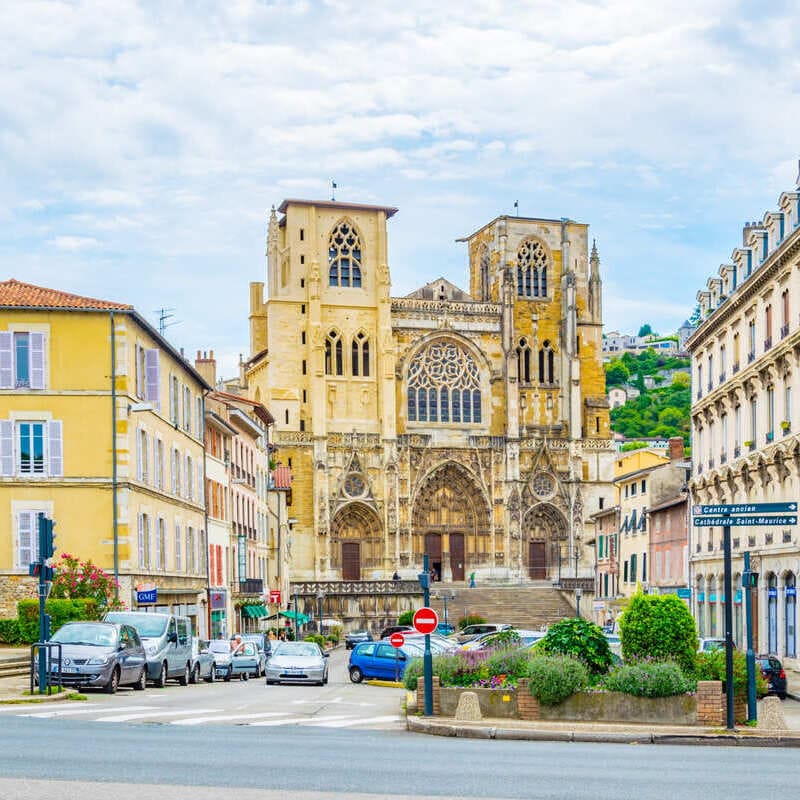
Vienne’s greatest draw is its Roman heritage, but its medieval history should not be overlooked. The city’s cathedral, Saint-Maurice de Vienne, is one of the earliest examples of Gothic architecture, with construction starting as early as the year 1100.
Average Prices In Vienne (Isère), France
| Item | Average price (USD) |
| Meal in inexpensive restaurant | $17–18 |
| 3-course meal in mid-range restaurant (for 2 people) |
$93–95 |
| Accommodation (3-star hotel, per night) |
$62–72 |
| Public transport (One-way ticket, bus/tram/metro) |
$2.80 |
Laon
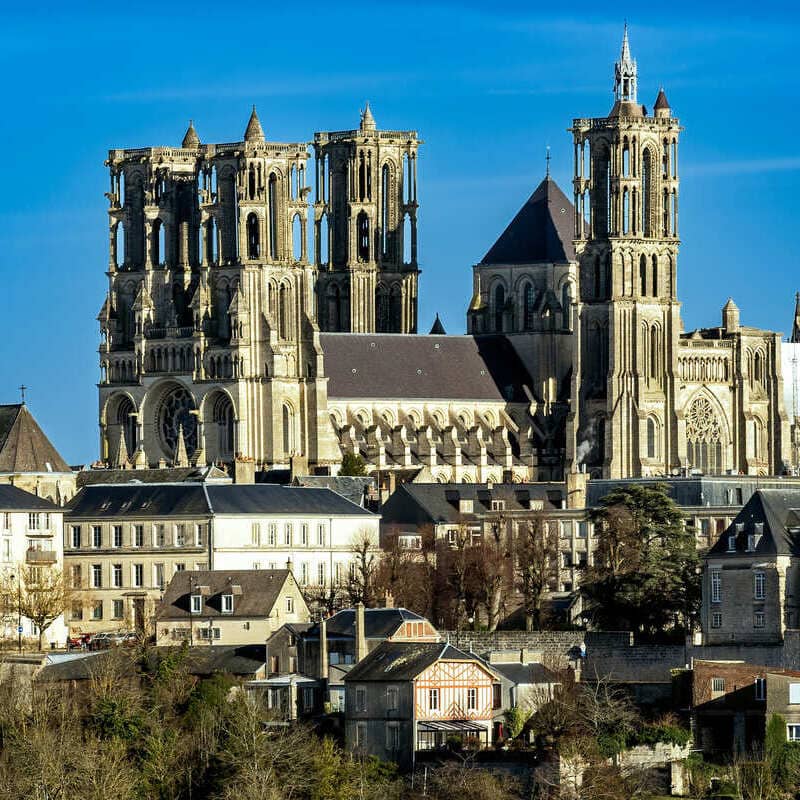
A small town in Northern France, easily reached from Paris with a 1h30 train journey, Laon is a medieval gem revolving around an early Gothic cathedral. Just as beautiful as the capital’s Notre-Dame in our book, it features ribbed vaults, tall windows, pointed arches, and flying buttresses.
Though it’s one of France’s most historical cathedrals, being consecrated in 800 AD in the presence of none less than Charlemagne himself, it’s among the least-visited: no long, snakeing lines in the square in front, and no muttered chattering to break the spell of its heavenly interior.
The Vieille Ville (or Old Town Laon) that surrounds the cathedral is equally-fascinating: picture winding cobble-paved streets, 15th-century walls and gates, and boulangeries selling warm, crumbly croissants and pain au chocolat without the Paris buzz.

If you can’t get enough of Laon’s medieval heritage, head next to the Templar Chapel: unassuming on the outside, it was in fact built in around 1140 by the Knights Templar, and it’s a rare example of an octagonal Templar building in France.
Average Prices In Laon, France
| Item | Average price (USD) |
| Meal in inexpensive restaurant | $17–20 |
| 3-course meal in mid-range restaurant (for 2 people) |
$58–74 |
| Accommodation (3-star hotel, per night) |
$58–70 |
| Public transport (One-way ticket, bus/tram/metro) |
$1.40 |
Dijon

They might know Dijon for the mustard, but very few people are aware their favorite imported sauce is named after a quaint city in northeastern France, dotted with postcard-ready medieval monuments, and surrounded by the UNESCO-protected vineyards of Burgundy.
If you only have a day in Dijon, chances are you’ll spend most of your time exploring the opulent chambers of the Palace of the Dukes of Burgundy, now home to the Musée des Beaux-Arts, one of France’s oldest museums.
That’s a whole afternoon if you wish to see it in full, and that’s why we’d encourage you to stay in Dijon at least two nights: from the 13th-century cathedral, to the Carthusian monastery of Champmol, to the timber-framed houses of the Old Town, there’s plenty more to see.

This is Burgundy, after all, and no visit to Dijon is complete without some wine tasting in a nearby winery. In that case, the small village of Gevrey‑Chambertin, just outside the city, is your best pick at finding top-tier Pinot Noir and verdant vineyards that operate year-round.
Average Prices In Dijon, France
| Item | Average price (USD) |
| Meal in inexpensive restaurant | $19–20 |
| 3-course meal in mid-range restaurant (for 2 people) |
$70 |
| Accommodation (3-star hotel, per night) |
$48–50 |
| Public transport (One-way ticket, bus/tram/metro) |
$1.65 |

The Travel Off Path Advantage: Your Travel Toolkit
Subscribe To Our Latest Posts
Enter your email address to subscribe to Travel Off Path’s latest breaking travel news, straight to your inbox.
